Part 1.
As an administrative co-coordinator, our job is to take this initial spark and run the development engine from proposal concept to submission.
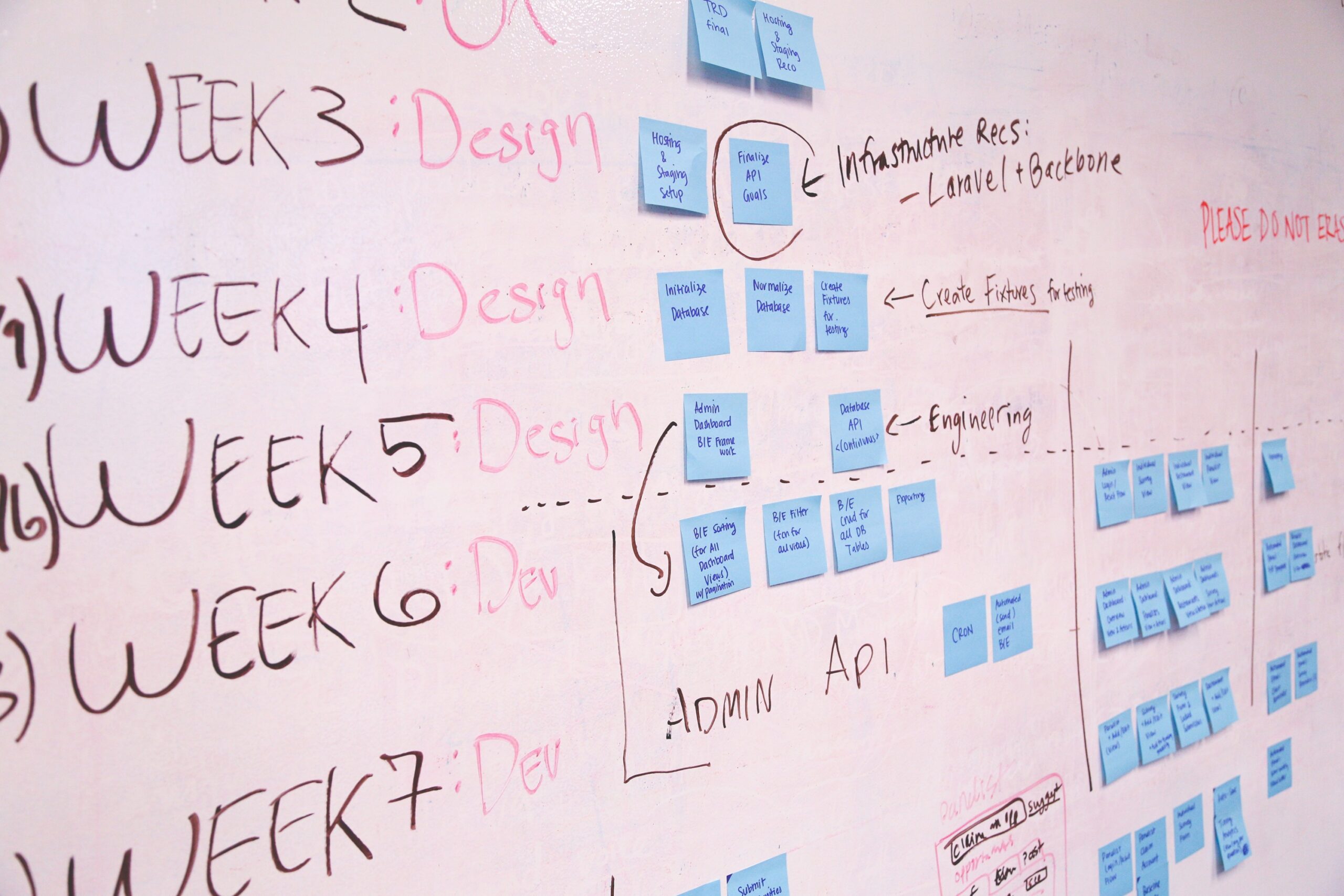
Here is the overarching timeline I use to turn an idea into a submitted 30- to 45-page document (depending on the call type and whether it’s a lump sum), ensuring the process remains within Commission guidelines throughout.
Month 6: Agreeing on Roles and the Core Concept
Everything starts with treating the call text as your holy text. You scan it for challenges, objectives, and required outputs, and bounce your initial idea off a trusted colleague. If you plan to split the leadership, agree on the coordination roles before you even draft the Concept Note. Some, but not all, Horizon Europe consortia run with a split between an administrative co-coordinator and the official Coordinator (technical coordinator). In many calls, particularly Research Innovation Actions (RIAs), the proposal concepts are driven by universities or research institutes. However, these organisations often lack the capacity for full proposal development and administration. That is where an experienced administrative co-coordinator can step in. Agree on this split upfront, think of it like a prenup. Renegotiating it under deadline is painful.
Once the coordination roles and the core idea are solid, you draft the Concept Note. This is your pitch document. You don’t need all your project partners yet, but you need your core team, usually the partners you have worked with previously, to lock in the primary methodology and preliminary Work Package (WP) structure.
Month 5: Finalising the Consortium
With the Concept Note in hand, you recruit to fill specific gaps (this is where you hit the Brokerage Events or CORDIS). Bring in the remaining partners to cover the exact expertise promised in the methodology, ensuring you hit the required mix of partner types (SMEs, academia, end-users) and secure a strong geographical distribution across the EU. If a prospective partner ghosts you for more than a week during this phase, drop them and move to your backup list. You do not have time to chase uncommitted partners.
Month 4: Building the Playground and Onboarding
Before the broader consortium arrives to do the heavy lifting, the admin co-coordinator builds the playground. We set up a shared workspace (SharePoint, Google Drive etc.) and structure it like a small website. The home page links to the official call text, names the proposal, and lists the coordinators. Behind that: folders for the call analysis, templates, meeting minutes, the preliminary Work Package (WP) structure, and the working Part B.
Once they are in, we onboard them with the necessary knowledge. We don’t assume the consortium speaks the same Horizon Europe dialect. We run short presentations covering Lump Sum vs. actual-cost grants, what feeds into Part A, and our rules on AI use and more. Everyone should be on the same page.
Months 3 and 2: Routine, Part A, and the Master Plan Dilemma
Set a regular meeting cadence, biweekly works now, weekly in the final stretch. Here you will face a classic project management dilemma: do you show the consortium the entire internal deadline schedule, or do you keep it to yourself?
Planning is essential, but plans are useless. In a proposal development cycle, internal deadlines rarely hold exactly to the date. If you hit partners with a massive, multi-month timeline upfront, they will either get overwhelmed or tune out entirely when the third deadline inevitably shifts. You, the coordination team, hold the master plan. The consortium gets the broad outline, and after every meeting, you remind them of only the next three actionable steps. Keep them focused on what is directly in front of them.
Alongside this, send an internally generated data collection template to partners to collect admin data, person-month rates, and partner profiles for the official Part A and budget.
Also, flag to partners that under the ERA living guidelines, AI notetakers and meeting summarisers used by third parties carry the same confidentiality, data-protection and IP risks as any AI tool the consortium uses itself. If a partner brings an AI agent into your consortium call, you need to know.
Month 1: The Writing Crunch and Submission
Coordination, we wrote two years ago, sits somewhere between dictatorship and democracy. In the final month, it leans heavily toward the former. The admin co-coordinator’s job is to enforce deadlines and hold the line. That is not bullying but about managing the entire process, ensuring every partner remains within the Commission’s guidelines so that the proposal satisfies exactly what is expected. And remember that submission day is not submission day. The portal will be overwhelmed. Plan to submit at least a day before, treating your first submission as a safety net and your final one as the polish.
The next post in this series goes inside that final month, what writing Part B actually looks like when multiple brains are working on a 45-page document with six weeks left.
If you want to go deeper on any of this, the Horizon Europe Academy runs a hands-on workshop in October covering the full proposal development cycle.